
The JUN Group
(Environmental Nanochemistry Laboratory, ENCL)
 A Recent Picture of the Environmental NanoChemistry Lab Members (April 2026).
The Jun group advances our understanding of nanoscale interfacial chemistry and solid nucleation to tackle important challenges in energy and the environment, focusing on three areas:
-
Energy-related CO2 chemical systems, including CO2 capture, utilization, and storage and subsurface engineering such as oil and gas recovery, geologic hydrogen storage, and geothermal energy systems.
-
New resource recovery technologies for critical elements (Li, Ni, Co, and rare earth elements) that are essential to energy technologies, for phosphorus and nitrogen nutrients for a sustainable circular economy, and for the generation of valuable chemical stocks from water desalination.
-
Nanomaterials and nanotechnologies for purifying drinking water and remediating contaminated water and soil.
The Jun Group introduction slide
What's new
Call for Papers
Call For Papers: Circular Water Economy
Professor Jun serves as a guest editor of the special issue. The special issue welcomes articles focusing on circular water economy research and practice that address major scientific and technological challenges such as selective separation and detection of critical water resources, critical minerals, and contaminants, water resource recovery, and water reuse. Submit your manuscript by October 1, 2026.
Call for Papers: Critical Minerals and Sustainable Energy Innovation
Professor Jun serves as a guest editor of the special issue. This joint Special Issue between ACS Sustainable Resource Management, Environmental Science & Technology, Environmental Science & Technology Letters, Industrial & Engineering Chemistry Research, and ACS Engineering Au will explore new and innovative ways to critical mineral exploration, extraction, and separations in addition to applications of critical minerals to energy innovations.. Submit your manuscript by June 1, 2027.
Click here to see all news from the ENCL since 2008!
September 21, 2026: Congratulations! Our paper entitled "Interfacial Control of CO2 Mineralization and Ni Recovery: The Role of Silicate Polymerization Degree and Nickel-Bearing Amount" has been accepted to be published in RSC Advances. We show how nanoscale passivation layers and silicate polymerization (Forsterite's isolated tetrahedra versus enstatite's chain-silicate framework) govern CO2 mineralization and Ni-sulfide nucleation kinetics at mineral surfaces. We also link silicate crystalline architecture to dissolution behavior and secondary nanophase precipitation, showing surface-mediated kinetics, not bulk composition, controls reaction efficiency.
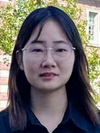
September 9, 2026: Congratulations! Ms. Xueyi Liu won a prize of the 2025 Chinese-American Professors in Environmental Engineering and Science (CAPEES) Student Poster Competition. Congratulations, Xueyi! |
 |
September 1, 2026: Congratulations! Our paper entitled "An Engineered Airgap with a Super-hydrophilic Aluminum Plate for Efficient Photothermal Airgap Membrane Distillation" has neem accepted to be published in ACS ES&T: Engineering. By linking surface engineering to desalination performance and operational efficiency, this work discusses a new condensation surface engineering strategy for high efficiency photothermal membrane distillation. Link to the paper
August 31, 2026: Congratulations! During the 2026 Washington University's Center for Water Innovation symposium, Ms. Claire Throckmorton received the 1st prize for her presentation. We are so proud of you, Claire! Congratulations! |
 |
August 28, 2026: Welcome aboard. Ms. Emily Chen, a sophomore in Energy, Environmental & Chemical Engineering student will work with us in fall 2026. |
 |
August 26, 2026: Join us at ACS for celebrating Women in Science& Engineering: Contribution to Environmental Chemistry. Wednesday, August 26, 2026, Room: N136 (McCormick Place Convention Center) Prof. Jun co-organizes the session with Prof. Jessica Ray and Kerry Hamilton, adn Virender Sharma.
August 25, 2026: Join us at ACS for an important innovative program symposium on Advancing a Circular Water Economy, Tuesday, August 25, 2026,
McCormick Place Convention Center, W192b. Prof. Jun organizes the session. Large image
August 24, 2026: Join us at ACS for an exciting innovative program symposium on Sustainable Recovery of Critical Minerals and Materials, Monday, August 24, 2026,
McCormick Place Convention Center, W196a. Prof. Jun organizes and charis the session. Large image
August 24, 2026: Congratulations! Our paper entitled "Nanoscale probing of local supersaturations for struvite nucleation at the organicwater interface" has neem accepted to be published in Environmental Science & Technology. Reactive interfaces can decouple local nucleation behavior from bulk saturation predictions by generating nanoscale regions of ion enrichment and reduced nucleation barriers. Link to the paper
August 22, 2026: Prof. Jun led the American Chemical Science's Committee on Science (COMSCI) meeting. She received an appreciation plaque for outstanding service as Chair of COMSCI by the Council of the American Chemical Society. |
 |

August 20, 2026: Congratulations! Our collaboration paper with Dr. Tiezheng Tong Group at Arizona State University has been accepted to be published in Desalination. The title of the manuscript is "Unveiling the influence of antiscalants on the crystallization of highly soluble salts in reverse osmosis concentrate". Link to the paper
August 10, 2026: Congratulations! Ms. Claire Throckmorton was chosen for a 2026 Ann W. and Spencer T. Olin-Chancellor's Fellow. |
|
August 5-6, 2026: Prof. Jun participated in the 2026 U.S.–Korea Conference on Science, Technology, and Entrepreneurship (UKC), Orlando, Florida. Prof. Jun received the 2026 Engineer of the Year Award by the Korean-American Scientists and Engineers Association (KSEA) and the Korean Federation of Science and Technology Societies (KOFST). Congratulations! President Oh Nam Kwon of the KOFST (left) and President Yong-Kyu Yoon of the KSEA (right)
August 3, 2026: Congratulations! Dr. Minkyoung Jung successfully defended her doctoral dissertation! Best wishes for your next step forward!
July 30-31, 2026: Prof. Jun and Xueyi travelled to the University of Delaware for participating in the annual Carbon Utilization Redesign for Biomanufacturing (CURB) Engineering Research Center meeting (a National Science Foundation's Engineering Research Center).
July 28, 2026: Congratulations! Our manuscript entited "Photocatalytic Impacts of BaTiO3 on Mn Redox Cycling in Complex Aquatic Environments" is accepted to published in Chemical Engineering Journal. This study provides the first mechanistic evaluation of how BaTiO3 (BTO), an emerging piezo-photocatalyst, influences redox reaction in complex aquatic systems—using Mn as a probe—and how its interfacial properties evolve during these reactions. Link to the paper
July 24, 2026: Mr. Ethan Yamada, a rising senior undergraduate student, successfully presented his summer research during the summer undergraduate research symposium. Great job, Ethan! (left) Ethan Yamada and (right) Xueyi Liu, graduate mentor
July 24, 2026: In collaboration with BrightPath STEAM Academy, Prof. Jun and ENCL are organizing a one-day summer camp for middle school students in St. Louis. During the camp, students will learn about chemistry, statistics, biomedical research, AI, semiconductors, and robotics, and they will visit faculty laboratories at McKelvey Engineering for hands-on activities. The camp provides students with the opportunity to explore a wide range of science and engineering topics through interactive demonstrations and engaging activities.

July 10, 2026: Congratulations, Xueyi Liu and Zixuan Xie received best student presentation awards at the the 23rd International Conference on Carbon Dioxide Utilization (ICCDU 2026), July 7–9, 2026, St. Louis, MO. |
 |
July 7, 2026: Prof. Jun was selected to receive the 2026 ACS Midwest Award which recognizes outstanding achievements in chemistry in the Midwest region. |
 |
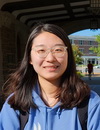
June 15, 2026: Congratulations! Through a highly competitive process, Ms. Gun Yi Park was chosen to attend the 2026 National X-ray School (NX School) to be held September 14 – 23, 2026, Argonne National Laboratory. Her paricipation will be fully supported by the U.S. Department of Energy. |
 |
June 10, 2026: Prof. Jun was appointed to join the ACS Presidential Task Force on Engagement, Advisory, and Advocacy: Appointed by the 2026 ACS President Rigoberto Hernandez. |
|
June 2-8, 2026: The ENCL (Honghyun, Taylor, Gun Yi, and Zixuan) travel to Argonne National Lab for Synchrotron-based experiments using Ultrasmall Angle X-ray Scattering (Sector 12ID-E) and Grazing Incidence Small Angle X-Ray Scattering (12ID-B). |
 |
 Photo from left to right: Honghyun Kim, Zixuan Xie, Taylor Barnett, and Gun Yi Park
June 6, 2026: Congratulations! Our collaborative paper entitled "Sulfide capture of Co and Ni after peroxymonosulfate-assisted autocatalysis of EDTA complexes" has been published in Applied Catalysis O. EDTA-assisted Co and Ni extraction from low-grade ultramafic ores is promising when paired with downstream concentration. This study examines peroxymonosulfate (PMS)-driven autocatalysis and decomplexation of metal–EDTA chelates, followed by recovery as sulfide minerals. Link to the paper
June 5, 2026: Prof. Jun presented her perspectives on the forefront research directions in chemistry with the National Academies's Board on Physics and Astronomy, discussing the future of condensed matter and materials science. |
|
June 5, 2026: Mr. Honghyun Kim will present a seminar at Argonne National Laboratory on his GISAXS, USAXS, and WAXS research on antiscalants. |
 |
June 4, 2026: Dr. Laura McConnell from Bayer visited Prof. Jun. We had a great discussion how we can promote our chemical education with Prof. Jennifer Heemstra, Department Chair of WashU Chemistry. Photo from left to right: Drs. Jennifer Heemstra, Young-Shin Jun, and Laura McConnell.
May 26, 2026: Mr. Ethan Yamada started his summer research. He is a senior undergraduate student in EECE at Washington University. He received a 2026 REU fellow at the NSF CURB Engineering Research Center. |
 |
May 15, 2026: Ms. Claire Throckmorton has passed her doctoral qualification exam. Congratulations! |
|
May 14, 2026: Congratulations! Professor Jun was selected to receive the 2026 Engineer of the Year Award by the Korean-American Scientists and Engineers Association (KSEA) and the Korean Federation of Science and Technology Societies (KOFST).

May 12, 2026: Congratulations! Minkyoung Jung and ENCL celebrated the commencement day! Best wishes, Minkyoung, for your bright future! 

May 6, 2026: Congratulations! Our manuscript has been accepted to publish in ACS ES&T Engineering. The article title is "Key Considerations in Developing Photothermal Membrane Distillation" 
May 5, 2026: Congratulations! Ms. Zixuan Xie uccessfully defended her thesis proposal. Look forward to seeing your excellent step forward!

April 24, 2026: Congratulations! Our manuscript has been accepted to publish in Chemical Reviews.
The article title is "Nanoscale CO2 Interfacial Reactions and Their Impacts on Sustainable Carbon Management"

April 23, 2026: Congratulations! Our manuscript has been accepted to publish in Water Research. The article title is “Phosphate Removal, Recovery, and Upcycling by Wollastonite and Calcium Phosphate Mineral–Hydrogel Composites” . In this study, we demonstrate that wollastonite and calcium phosphate mineral–hydrogel composites is a new circular approach for P capture and reuse, supporting water quality management and suggesting the possibility of beneficial agricultural applications. Exciting and important work. Congratulations!

April 17, 2026: Professor Jun hosted Professor Soryong Choi from the University of Cincinnati as our department seminar speaker. Professor Choi introduced large-scale synthesis of carbon materials and their use for membrane distillation via interfacial heating. He also offered generous advice to undergraduate and graduate students in ENCL.
Thank you, Professor Choi! 
April 8-14, 2026: The ENCL (Prof. Jun, Minkyoung, Taylor, Honghyun, Claire, Xueyi, Gun Yi, and Zixuan) travel to Argonne National Lab for Synchrotron-based Grazing Incidence Small Angle X-Ray Scattering beamtime at 12ID-B. |
|
April 5-8, 2026: Taylor and Claire participate in a Special Workshop "Beyond Rg Materials SAXS," Advanced Photon Source, Argonne National Laboratory, IL. |
|


April 6, 2026: Congratulations! A collaboration paper with Dr. Sebastien Kerisit at Pacific Northwest National Lab has been published in the Journal of Physical Chemistry C. The title of the paper is “Interfacial Energies of Amorphous Magnesium Carbonate on Pristine and Reacted Forsterite Surfaces”
This study offers a molecular-level explanation for experimentally observed carbonate nucleation mechanisms. Link to the paper
April 1-4, 2026: Prof. Jun visited Ames National Laboratory and Iowa State University (Chemistry Department) for critical minerals research collaboration and gave an invited seminar. The Ames Lab has exceptional capabilities that support research on critical minerals from fundamental studies through full pilot scale, including the Ctitical Materials Innovation Hub, the Advanced Magnet Facility, and the METALLIC Facility. Click for more pictures |


 Photo from left to right: Dr. Karl Mueller, Director of the Ames National Laboratory, Dr. Long Qi, Dr. Tom Lograsso, Director of the Critical Materials Innovation Hub (CMI) and Director of Division of Critical Materials, and Dr. Ikenna Nlebedim, Deputy Director of CMI.
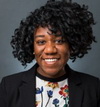
March 31, 2026: Congratulations! Prof. Jessica Ray (2015 ENCL Ph.D.) at the University of Washington will be promoted to Associate Professor with Tenure in September. Big congratulations and achievement, Prof. Ray! We are so proud of you. We wish your many more continued success! Link to Prof. Ray website. |
 |
March 24, 2026: Congratulations! Mr. Ethan Yamada was chosen to conduct summer research with us as part of NSF CURB Engineering Research Center.
March 20-26, 2026: The ENCL participated in the 2026 ACS spring meeting in Atlanta. Please stop by our talks! Our talk schedules are available in pdf file here.
Prof. Jun led the ACS Committee on Science Meeting and chaired the Advancing Resource Recovery for Critical Minerals symposim.
 ACS Committee on Science, March 21, 2026
-
Sustainable utilization of CO2 using PEI incorporated CaCO3 mineral-hydrogel composites in biorefinery application, Sunday, March 22, 2026 from 8:45 AM - 9:05 AM, A403 - Georgia World Congress Center, Speaker: Minkyoung Jung
-
Direct observations of critical development: Iron (hydr)oxide nucleation on substrates: From mineral coatings to desalination mineral fouling, Monday, March 23, 2026 from 8:05 AM - 8:35 AM, A304 - Georgia World Congress Center, Speaker: Young-Shin Jun
-
Spatial cobalt enrichment and separation driven by interfacial carbonate crystallization and microfluidic control, Monday, March 23, 2026 from 8:25 AM - 8:45 AM, A302 - Georgia World Congress Center, Speaker: Xueyi Liu
-
Ni recovery from Ni-containing forsterite (Mg2SiO4) and enstatite (MgSiO3), Tuesday, March 24, 2026 from 9:35 AM - 10:05 AM, A303 - Georgia World Congress Center, Speaker: Young-Shin Jun
-
Sulfide diffusion in carbonate nanochannels for nondestructive cobalt extraction and carbon mineralization, Tuesday, March 24, 2026 from 3:05 PM - 3:25 PM, A303 - Georgia World Congress Center, Speaker: Xueyi Liu
-
Scalable struvite and calcium phosphate (CaP) mineral-hydrogel composites for nutrient remediation and algal blooms mitigation, Wednesday, March 25, 2026 from 8:30 AM - 8:50 AM, A305 - Georgia World Congress Center, Speaker: Minkyoung Jung
-
Supercritical fluid-assisted selective recovery of rare earth elements from unburned coal, Thursday, March 26, 2026 from 8:40 AM - 9:00 AM, A304 - Georgia World Congress Center, Speaker: Young-Shin Jun
March 10-14, 2026: The ENCL (Taylor, Honghyun, Claire, Xueyi, and Minkyoung) traveled to Argonne National Lab for Synchrotron-based Ultra Small Angle X-Ray Scattering beamtime at 12ID-E. |
|
March 5-15, 2026: Prof. Jun joined with WashU delegates to visit Korean Universities (Pohang University of Science and Technology and Seoul National University). Click for learning more activites |
  |

March 3, 2026: Congratulations! Our manuscript has been accepted to publish in Environmental Science: Nano. The article title is "Photochemically Facilitated Todorokite Nanoparticle Formation in Circumneutral pH Environments". This study suggests a new paradigm for the homogeneous formation of todorokite, which has been hitherto believed to be a secondary mineral phase resulting from diagenesis of layer-structured Mn oxides, under environmentally relevant conditions. In addition, our findings suggest a sustainable and facile pathway for the synthesis of todorokite nanostructures with potential applications in energy storage and catalysis. 
February 24, 2026: Congratulations! Our manuscript has been accepted to publish in ACS Sustainable Chemistry & Engineering, titled "Sulfide Transport Through Nanochannels in Carbonates Enables Simultaneous Cobalt Extraction and Carbon Mineralization." Our proof-of-concept approach combines carbonation, sulfidation and subsequent oxidation to efficiently extract cobalt, a critical element for batteries. This novel process achieves effective critical element recovery, which supports sustainable development of resources and byproduct treatment from energy generation. 
February 14, 2026: Welcome back! Prof. Yaguang Zhu (2022 ENCL Ph.D.) at Texas Tech University visited WashU! We took pictures next to his experimental bench for high T/P systems. Great to see you in person and we are so proud of you!
February 13, 2026: Professor Jun had the pleasure of hosting Dr. Karl Mueller, Director of Ames National Laboratory (Iowa).
Dr. Mueller shared his inspiring career journey and his long-standing passion for nuclear magnetic resonance (NMR)—a powerful technique for determining molecular structure, purity, and dynamics. He also highlighted exciting new directions in energy storage materials discovery, where AI-enabled research is accelerating the design and understanding of next-generation materials. We were grateful for his insightful talk and the stimulating discussions on collaboration opportunities. Bottom right (left to right): Drs. Young-Shin Jun, Karl Mueller, Dean Aaron Bobick, and EECE Department Chair Joshua Yuan.
February 8-11, 2026: Prof. Jun made a podium presentation about the critical element (Ni and Co) project during the DOE Basic Energy Sciences PIs' Meeting in Washington, DC.
January 29, 2026:
The Inaugural 2025 Interfaces for Energy and the Environment Conference (IEEC) was held at Pacific Northwest National Laboratory (Richland, Washington, USA) from May 19 – 23, 2025. This interdisciplinary conference aims to advance understanding of mineral-aqueous interfaces relevant to energy and environmental applications. Prof. Jun led to prepare the Summary Report. This report provides insights into the current and future state of interfacial science. 
January 27, 2026: Congratulations! Our collaborative work with Dr. Qingbo (Roger) Yang at Lincoln University has been published in ACS Agricultural Science & Technology, entitled "Uptake and Fate of Silver and Zinc Engineered Nanoparticles in Maize Under Single and Binary Dosing Soil Ecosystems" Link to the paper
January 23, 2026: Congratulations! Our manuscript has been accepted to publish in Environmental Science & Technology, entitled Crystallization of Carbonates with Core-Shell Structure: Insights into Cobalt-Iron Separation for Enhanced Critical Element Recovery. Our findings illuminate kinetics changes and heterogeneity evolution of carbonation process in multi-ion systems and provide scientific foundations for Co-Fe isolation in coprecipitation processes for better Co recovery. 
January 2026: Congratulations to Minkyoung! Minkyoung has been selected as a winner of the 2026 Graduate Student Award in Environmental Chemistry in the Division of Environmental Chemistry of the American Chemical Society. |
 |
January 19, 2026: Congratulations! Our proud alumnus, Dr. Zhenwei Gao (2022 ENCL Ph.D.) started an assistant professor in the Assistant Professor in the College of Environmental Science and Engineering at Tongji University. Best wishes for your start! We are proud of you! |
 |
January 14, 2026: Congratulations! Our proud alumnus, Dr. Yaguang Zhu (2022 ENCL Ph.D.) started an assistant professor in the Department of Civil, Environmental & Construction Engineering and the Institute for Sustainability and Circular Economy at Texas Tech University. Best wishes for your new venture! Enjoy being a professor! |
 |
January 13, 2026:Congratulations! Ms. Xueyi Liu was selected to receive the ACS Geochemistry Division's Student Travel Award for attending the Spring ACS meeting in Atlanta. Congratulations, Xueyi! |
|
January 5, 2026: Congratulations! Our proud alumnus, Dr. Inhyeong Jeon (2016 ENCL UG) accepted his position as assistant professor in School of Health and Environmental Sciences at Korea University, Seoul, South Korea. Best wishes for your new exciting new steps as a professor! |
 |
January 5, 2026: Congratulations on our group's 150th paper! Our manuscript has been accepted to publish in Materials Horizons, entitled Core–Shell Mg–Ni Carbonate Supercapacitor Materials by Concurrent Ni Recovery and CO2 Mineralization. This study proposes using Ni-Mg carbonate recovered from low-grade Ni and Mg resources as effective electrodes for energy storage in supercapacitors and lithium-ion batteries. The research underscores the benefits of sustainable carbon management, resource recovery, and the advancement of efficient, eco-friendly energy systems. 
January 1, 2026: Prof. Jun has been appointed as the inaugural Anna McKelvey Endowed Chair Professor in Washington University's McKelvey School of Engineering. Prof. Jun with Dean Aaron Bobick
December 26, 2025: Prof. Jun is reappointed to be the 2026 Chair of the American Chemical Society's Committee on Science (COMSCI) by the 2026 ACS President Rigoberto Hernandez and 2026 ACS Board Chair Wayne E. Jones Jr. She will lead COMSCI efforts to advance the frontiers of chemistry.

December 15-December 20, 205: Prof. Jun attended the 2025 International Chemical Congress of Pacific Basin Societies and presented research findings from the National Alliance for Water Innovation Project.
December 5 and 8, 2025: Welcome back, the big ENCL family! ENCL had four student visitors and Professor Jung from the Department of Chemical Engineering at Changwon National University, South Korea. Prof. Haesung Jung (2017 ENCL PhD) is currently Dean of Liberal Arts Education Institute and Associate Professor at Changwon National University.
 Professor Jung was holding his doctoral dissertation in Professor Jun's office and reflecting his time at WashU.
December 1, 2025: Congratulations! Mr. Honghyun Kim successfully defended his thesis proposal. Great job!
November 29, 2025: Congratulations! Our collaborative manuscript has been accepted to publish in Agriculture, Ecosystems & Environment, entitled "Tillage changes transport and fate of microplastics in the agricultural environment." Link to the paper
November 24, 2025: Ms. Claire Throckmorton is formally joined as a permanent PhD ENCL student member. |
|
November 21, 2025: Congratulations! Our collaborative manuscript has been accepted to publish in ACS ES&T Engineering, entitled "Antiscalants in Reverse Osmosis Concentrates: Impact, Removal Strategies, and Pathways to Zero Liquid Discharge." This paper discusses the complexities of managing antiscalants in zero liquid discharge (ZLD) systems, underscoring the importance of innovative removal technologies for sustainable desalination. These advancements contribute to more effective ZLD systems and enhanced water recovery in desalination processes. Link to the paper.

November 13-17, 2025: The ENCL(Minkyoung, Xueyi, Honghyun, Zixuan, Taylor, and Gun Yi) traveled to conduct grazing incidence small angle X-ray scattering experiments at Sector 12ID-B at Argonne National Laboratory. Picture credit: Argonne National Laboratory
November 11, 2025: Prof. Jun participated in the new American Association for the Advancement of Science (AAAS) Fellow reception at the Harbison House, hosted by Chancellor Andrew Martin. Prof. Jun with Chancellor Andrew Martin
November 4, 2025: Congratulations! Our collaborative manuscript has been accepted to publish in American Mineralogist, entitled “Synthesis of Critical Element-bearing Olivine and Pyroxene.” This paper reports on the synthesis of forsterite and enstatite with Ni and Co contents ranging between 1.2 and 8.6 wt.% at a large mass scale for systematic studies.
October 30-November 3, 2025: Ms. Zixuan Xie traveled to conduct X-ray absorption spectroscopy at Sector 13 ID-E at Argonne National Laboratory.
October 20-25, 2025: The ENCL travels to the Advance Photon Source of the Argonne National Laboratory to conduct Ultra Small Angle X-ray Scattering experiments at Sector 12ID-E.
October 24, 2025: Congratulations! Our manuscript has been accepted to publish in Environmental Science & Technology, entitled “Dithionate Inhibits Iron Oxide Formation during Olivine Dissolution Advancing Simultaneous CO2 Mineralization and Nickel Recovery.” Using dithionite, we demonstrate a novel method for simultaneous CO2 mineralization and critical element recovery from abundant low-grade silicate ores. Link to the paper
October 20, 2025: Congratulations! Our paper has been accepted to Water Research, entitled "Abiotic Manganese Oxide Formation Induced by Light and Copper-Driven Fenton Chemistry" Under light illumination, copper-driven Fenton chemistry can promote the kinetics of manganese oxidation and enable the formation of manganese oxide particles. Our findings advance the understanding of heavy metal interactions in aqueous environments and highlight the intricate roles of Cu2+ in affecting elemental cycling and evaluating heavy metal contamination in water resources. Link to the paper
October 14, 2025: Congratulations! Ms. Taylor Barnett has been chosen to receive the prestigious Ann W. and Spencer T. Olin-Chancellor's Fellowship, which supports her doctoral program. So well deserved and we are happy for you, Taylor! |
 |
October 13, 2025: Ms. Gun Yi Park wonderfully presented her leadership vision at Washington University's McDonnell International Scholars Academy. 
October 11, 2025: Prof. Jun, Xueyi Liu, Mingyang Song, and Honghyun Kim participated in the 2025 Mid-American Environmental Engineering Conference (MAEEC), Washington University, St. Louis, MO. Mingyang and Honghyun presented our projects, Xueyi helped the conference coordination, and Prof. Jun chaired a session. Proudly, Honghyun Kim received the best presentation award! Congratulstions, Honghyun! For the bigger image

October 9-11, 2025: Prof. David Sedlak visited WashU and gave a wonderful AEESP (Association of Environmental Engineering and Science Professors) lecture as part of MAEEC event. During his visit, the Environmental NanoChemistry Lab members enjoyed interacting with him and received career advices.
October 10, 2025: Welcome aboard! Mr. Ethan Yamada joined the ENCL for his undergraduate research. |
 |
October 2, 2025: Professor Jun was invited to attend the National Academies of Sciences, Engineering, and Medicine workshop on Frontiers of Materials That Learn. |
|
September 26, 2025: Championing the frontiers of chemistry! Professor Jun discussed her leadership in the American Chemical Society's Committee on Science in Chemical & Engineering News. |
|
September 24, 2025: Best wishes, Dr. Ying Wang. The ENCL celebrated Dr. Wang's PhD (ENCL 016) and her new journey at the University of Chicago. We are very proud of you and wish you all the best!
September 23, 2025: Safety goes first! The ENCL received 100/100 score from the annual environmental health and safety (EH&S) inspection. Keeping safer research environment is critical for science advance and technology innovation as well. Thank you, the ENCL EH&S manager Honghyun Kim and former EH&S manager Ying Wang, for leading the efforts, and the ENCL members for your careul operation.
September 22, 2025: Congratulations! Our National Alliance for Water Innovation project collaboration with Sheraze Bashir, Athkia Fariha, Leslie Miller, Prof. David Quiroz, Prof. Yang Yang, Prof. Taeyoung Kim resulted in an interesting paper entitled "Antiscalant effects on pH-mediated electrochemical precipitation of scaling ions in brackish water reverse osmosis concentrates", which is accepted to be published in ACS ES&T Engineering. Link to the paper
September 17, 2025: Congratulations, Dr. Ying Wang (ENCL 16th PhD)! Dr. Wang successfully defended her doctoral dissertation. She will start her postdoc research in Molecular Engineering at the University of Chicago on October 1, 2025.
September 7-9, 2025: Prof. Jun hosted Prof. Lei Guo from the University of Arkansas for a special Center for Water Innovation seminar. Prof. Guo offered an intriguing PFAS talk and provided generous advice to graduate students. Thank you, Dr. Guo!
September 8, 2025: Congratulations! During the 2025 Washington University's Center for Water Innovation symposium, Ms. Gun Yi Park received the 2nd prize for her presentation. This is a wonderful achievement, Gun Yi! Congratulations! |
|
September 8, 2025: Congratulations! Ms. Taylor Barnett and Ms. Gun Yi Park successfully presented their doctoral research projects for the first time at the 2025 Washington University's Center for Water Innovation symposium. |
|
September 7, 2025: Congratulations! Our paper has been accepted to ACS Applied Materials & Interfaces, entitled "Photochemically-Assisted Formation of Layered Manganese Oxide Nanosheets with High Pseudocapacitance for Potential Environmental Applications" This work demonstrates photochemically generated MnO2 can be used for supercapacitor materials. This is exciting because we do not need heating or high akaline conditions to synthesize the energy storage materials! Link to the paper
August 21, 2025: Congratulations! Our paper has been accepted to Crystal Growth & Design, entitled “Soft Nanoconfinement Nucleates and Stabilizes Ultrasmall Amorphous Calcium Carbonate.” Organisms use soft confinement structures, such as vesicles and compartments, to direct the nucleation of calcium carbonate (CaCO₃) and its subsequent processes during biomineralization. Utilizing nanoemulsion, we demonstrate how the size and distribution of CaCO₃ are controlled within soft confinement. link to the paper
August 21, 2025: Welcome aboard! Ms. Claire Throckmorton (left) and Mr. Sebastian Kockler (right) joined to work with ENCL. Claire is a first year PhD student and Sebastien is a first year master student. |
 |
August 19, 2025: Congratulations! Our struvite-hydrogel composite research has been highlighted in ACS Chemical & Engineering News! These new composites can enable the circular nutrient economy, turning a headache into a solution! Check out the full paper as well!
August 15-19, 2025: Professor Jun participated in the American Chemical Society Meeting in Washington, D.C. She led multiple activities during the meeting, including a full member meeting of the Committee on Science; Women in Science and Engineering in Environmental Chemistry; and Circular Water Economy. As Chair of the Committee on Science, Professor Jun supported 14 ACS innovative programs during the Fall 2025 ACS meeting, which included celebrating the 75th anniversary of the National Science Foundation. Additionally, she gave two research talks—one on hydrogels and the other on critical materials recovery.
August 11, 2025: Congratulations! From the ACS Environmental Chemistry Division, Ms. Mingyang Song received a Certificate of Merit, a recognition of her excellent presentation at the ACS Spring 2025 meeting. Great Achievement, Mingyang! Keep up the good work! |
 |
August 6, 2025: Congratulations to Ying! Ying has accepted an offer from Molecular Engineering at the University of Chicago as a postdoctoral scholar. She will work with Dr. Chong Liu. She will start her position on October 1, 2025. Congratulations and best wishes~ |
 |
August 5, 2025: Congratulations! Our paper has been published in the Journal of Hazardous Materials, entitled “Photolysis of disposable face masks facilitates abiotic manganese oxide formation.” This study, for the first time, reports the photolysis of PP mask layers and their impacts on kinetics of Mn2+ (aq) oxidation to Mn oxide nanoparticles. These findings highlight the influences of masks photolysis on Mn redox chemistry. Mn oxides formed on mask materials can alter the fate and transport of pollutants such as heavy metals and organic compounds, impacting surface water quality. Congratulations on the exciting new paper! Engineering News highlight ; Link to the paper
July 31-August 4, 2025: Ms. Zixuan Xie traveled to Argonne National Laboratory to conduct synchrotron-based X-ray absorption spectroscopy at Sector 13ID-E of the Advanced Photon Source. She analyzed coal samples to determine the distribution of rare earth elements within them. |
|
July 28, 2025: Congratulations! Our collaboration with Prof. David Fike resulted in a wonderful paper entitled "Selectivity of Tris complexation for Ni(II), Co(II), and Fe(II) and its effect on carbonate precipitation under alkaline conditions", which is accepted to be published in Applied Geochemistry. Link to the paper
July 22, 2025: Congratulations! Our paper has been accepted to ACS Applied Materials & Interfaces, entitled “Accelerated Nanopit Formation on MoS₂ Nanosheets through Photo-Fenton Reactions.” Our study reports that exposure to aqueous iron and light alters the properties of MoS₂ nanosheets, affecting their dissolution kinetics, pathways, and photocatalytic activity. These changes are directly linked to their reliability in photochemical applications and their environmental fate. Congratulations to the team! Link to the paper
July 12-19, 2025. Professor Jun received the IUPAC 2025 Distinguished Women in Chemistry or Chemical Engineering Award at the commencement of the IUPAC's 50th World Chemistry Congress in Kuala Lumpur, Malaysia. She also provided invited speech at Nanotechnology for Sustainable Agriculture.
July 18-20, 2025: Ms. Minkyoung Jung and Ms. Gun Yi Park travelled to conduct synchrotron-based ultrasmall angle X-ray scattering experiments at Sector 12ID-C-D-E at the Advanced Photon Source, Argonne National Laboratory, IL.
July 18, 2025: Energize future scientists and engineers! The ENCL hosted middle school students from the BrightPath STEAM Academy and introduce Environmental and Chemical Science and Engineering. Ms. Mingyang Song, Ms. Xueyi Liu, and Ms. Zixuan Xie lead the excellent workshop.
June 23, 2025: Congratulations on our new publication! The manuscript titled “Roles of Surface Mn(III) and MgOH+/CaOH+ Complexation in Photochemically Assisted Todorokite Formation” was published in Chemical Engineering Journal. Our study reveals that how environmentally abundant ions and pH can affect the fast tunnel structure formation of MnO2, providing novel insights into the elusive formation of todorokite and its potential for applications in advanced water treatment and environmental remediation. Link to the paper
June 23-24, 2025: Prof. Jun participated in the annual AMEWS meeting. Since 2018, she has been served as the Scientific Advisory Board of the Department of Energy's Energy Frontier Research Center AMEWS, Argonne, IL. 
June 12-16, 2025: In situ observations of solid nucleation on substrates! The ENCL travelled to conduct GISAXS experiments at Sector 12 ID-B at Argonne National Laboratory, IL.
June 7, 2025: Prof. Jun participated in the induction ceremony as a 2024 Fellow of the American Association for the Advancement of Science (AAAS) in Washington D.C.